The alarm goes off early and you are already awake. That's how race day works. By the time you've loaded the car and driven to Cambridge, Maryland, the transition area is already buzzing — athletes checking tire pressure, mixing nutrition, pulling on wetsuits in the pre-dawn quiet. The energy is something you can't manufacture. You either show up for it or you don't.
The Cuisine Solutions IRONMAN 70.3 Eagleman — nicknamed "Wings of Fire" — is one of the most iconic half-ironman distance races in the country. Held in Cambridge on Maryland's Eastern Shore, the course is 70.3 miles total: a 1.2-mile open-water swim in the Choptank River, 56 miles on a flat bike course through the farmland of Dorchester County, and a 13.1-mile run to the finish. Flat doesn't mean easy. It means you have nowhere to hide.
Why Triathlon Is the Hardest Sport to Photograph
A football game has a field. Wrestling has a mat. Even a marathon has a defined finish chute where you know something is going to happen. Triathlon gives you a 56-mile bike course, an open road, and thousands of athletes spread across it. There is no single vantage point. You have to make decisions.
The swim is nearly impossible — athletes are in the Choptank River, often before full light, and from the bank you're photographing caps and white water. The transition areas are chaotic and fast. The bike leg is where you can really work, if you've scouted the course and positioned yourself somewhere with clean light and a good background. The run is where the story lives.
What I've learned is that the best race photos rarely come from the obvious spots. Everyone clusters at the finish line. The images that actually mean something to an athlete are the ones from the middle — mile 35 on the bike, mile 9 of the run — when they weren't thinking about the camera. When they were just in it.
Before the Gun
I was following two athletes on this particular day: Dylan and Dante — friends since high school who decided in 2025 to take on a new challenge together. They started training as a team and crossed the same starting line side by side, standing in the queue at the Choptank River with thousands of other competitors waiting for the same horn.
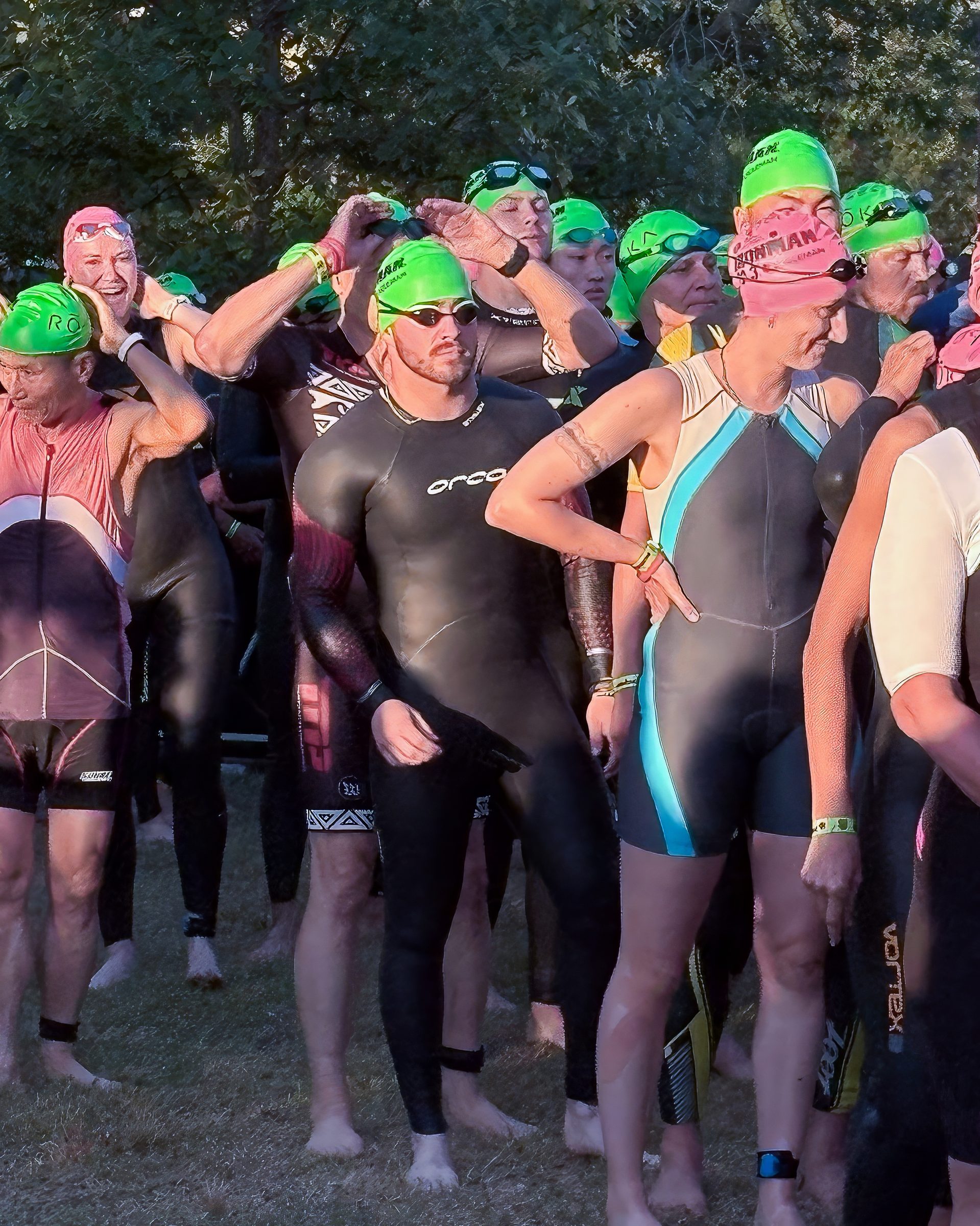
There's a particular look athletes get in the minutes before a race starts — especially a 70.3. The work is done. The taper is done. Everything that could have been prepared has been prepared. What's left is just waiting for permission to go. Dylan here has that look: settled, focused, somewhere in his own head.
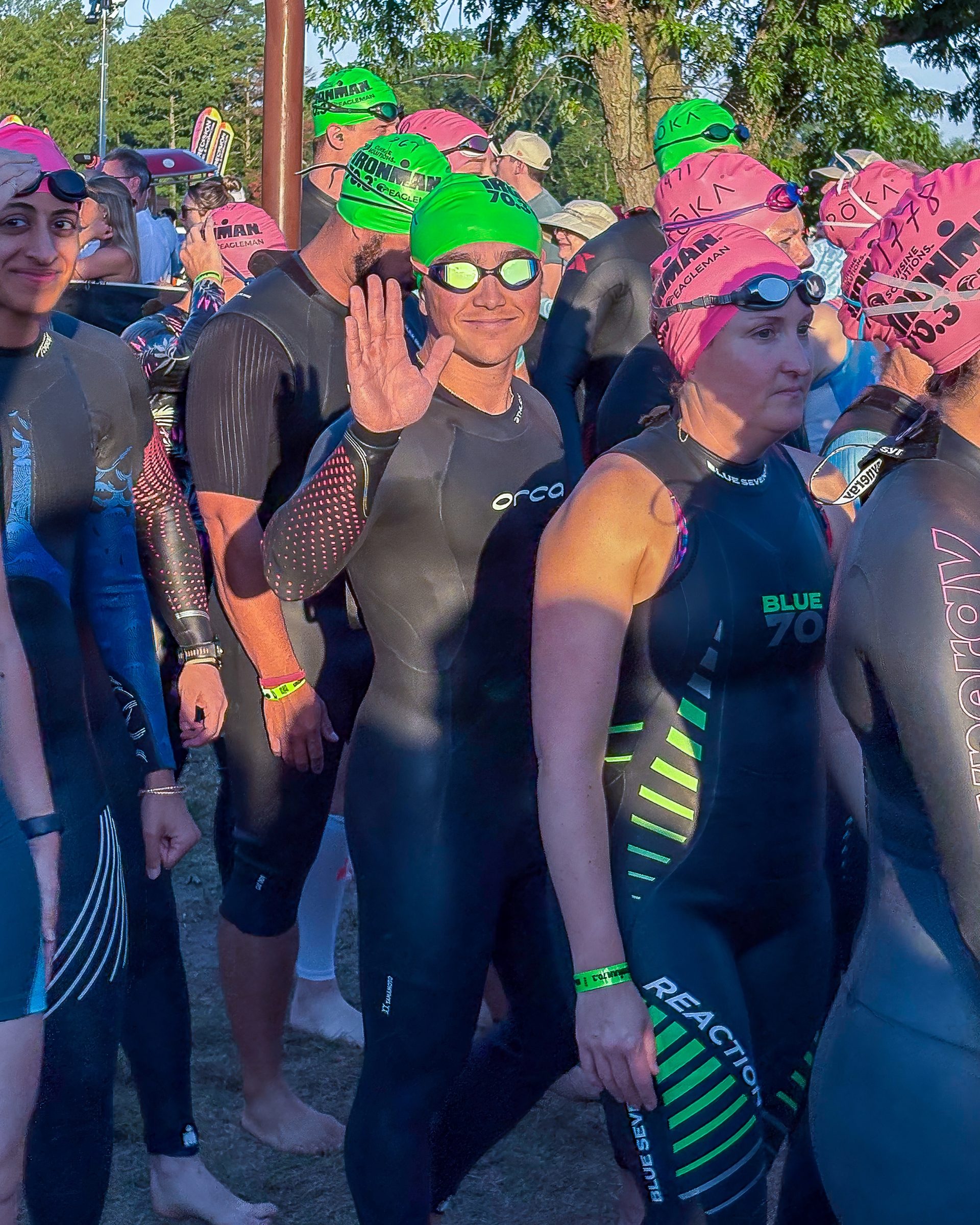
Dante beside him. Same stillness. This is one of my favorite moments to photograph because the race hasn't started yet and the athlete is completely unguarded. They're not performing for anyone. They're just present.
Then the gun goes.
Dylan entering the Choptank. One moment he's standing in that queue on the bank, then he's in the river and the race is real. I always try to get this transition — the step from waiting to moving. It's fast and it doesn't repeat.
The Bike Leg: 56 Miles of Decisions
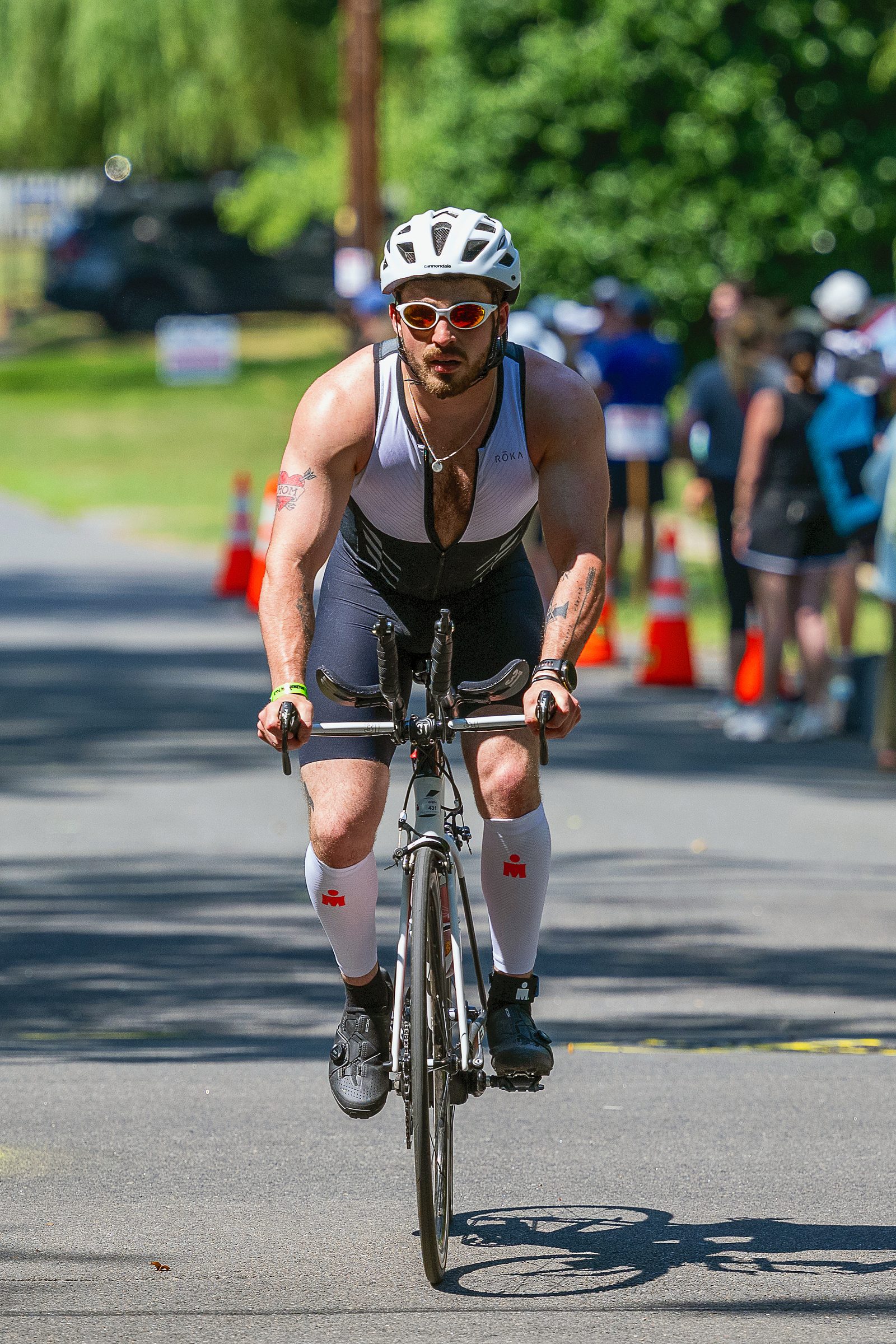
This is Dylan, mid-race on the bike. By the time I got this shot, he'd already swum 1.2 miles in the Choptank and had another 30 miles to go before he'd even lace up his running shoes. You'd never know it from his position — head down, power through the pedals, completely absorbed in the work.
The Eagleman bike course is flat, which sounds like a relief until you realize what that means: no downhills to recover on, no climbs to shift your muscle groups, just sustained output across the farmland of Dorchester County with the Eastern Shore wind doing whatever it wants. Photographing cyclists here means finding a spot with a clean sightline and committing to it. You're working with fast shutter speeds to freeze motion, pre-focusing on a point on the road because you don't have time to track and acquire as the athlete comes through. You get one pass. You have to be committed to your frame before they arrive.
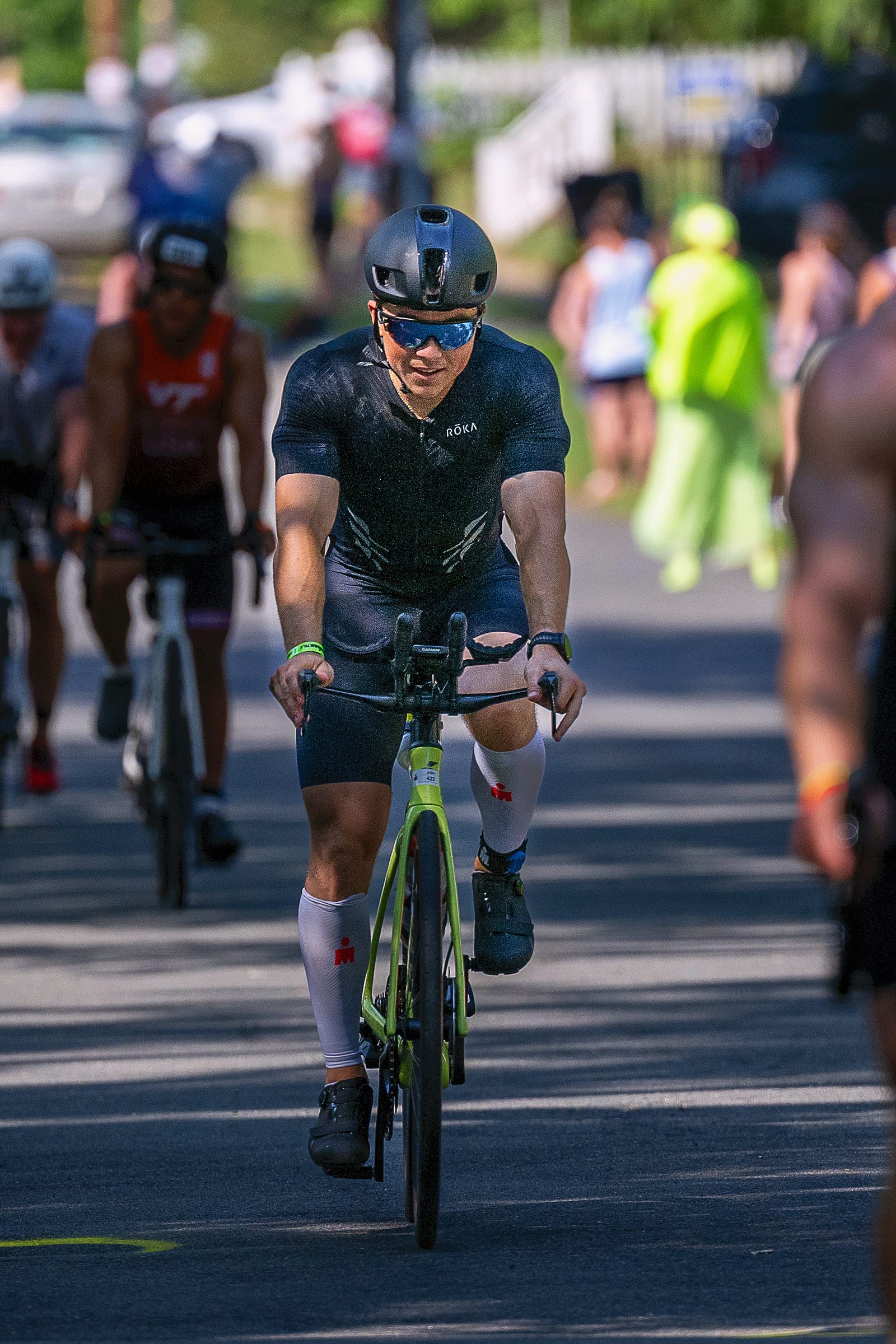
Dante in the same stretch. What I'm reading in the position, the helmet angle, the grip on the bars — this athlete is managing his effort, not surviving it. That's the difference between a good bike photo and an interesting one. Anyone can photograph a cyclist in motion. The image worth keeping is the one that shows you who the person is inside the race.
The Run: Where Everything Shows
By the half-marathon, athletes have been racing for hours. The veneer is gone. The face you see on the run is the real one — the one that's done the math about how much is left and decided to keep moving anyway.
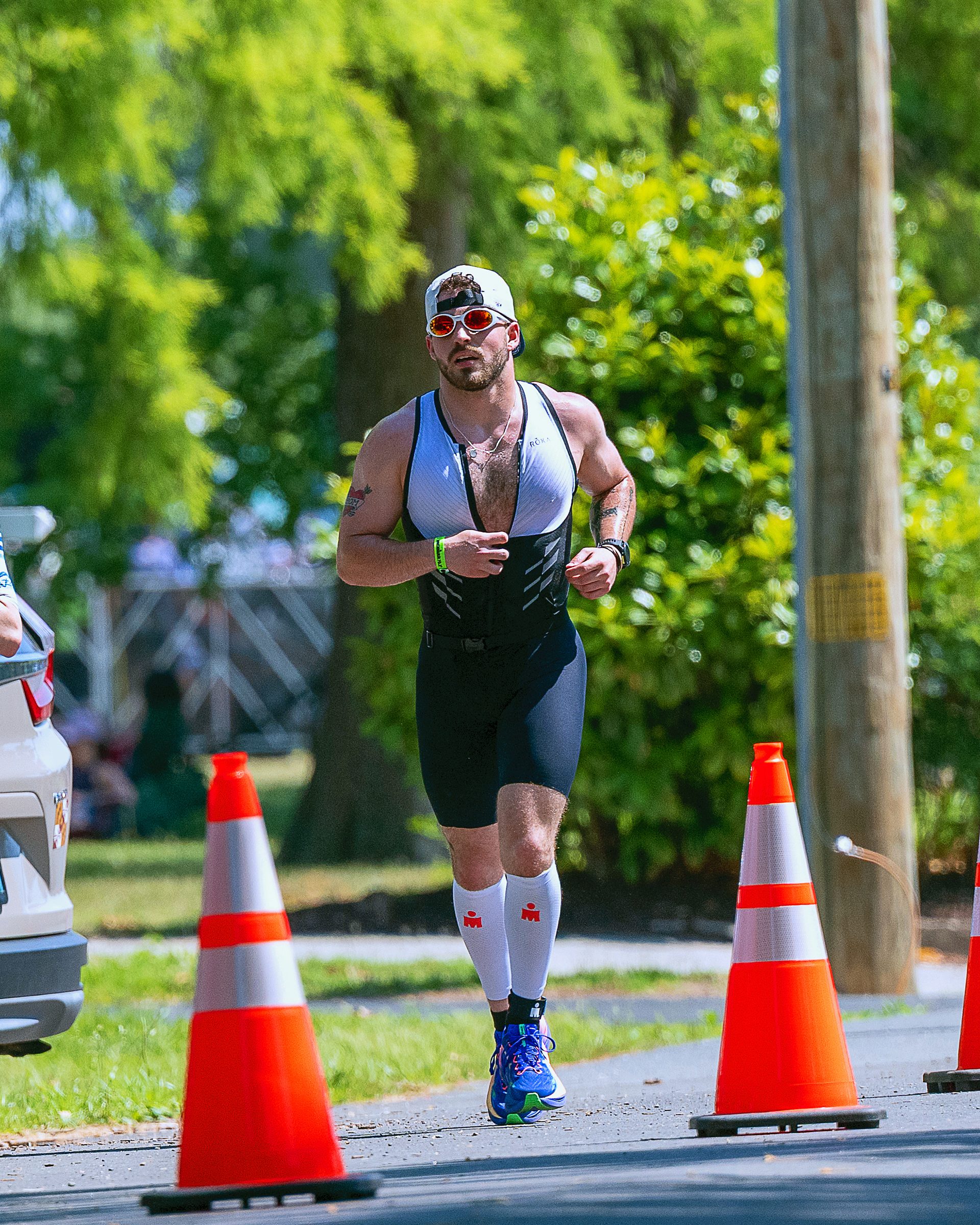
Dylan here has already covered 1.2 miles in the river and all 56 miles on the bike. His form is still purposeful. There's a version of this photo that shows someone grimacing, shuffling, reduced — that's a real moment too, and sometimes athletes treasure those most because they show what the race actually cost. But there's something equally honest in a frame where the training is still visible: a person doing exactly what they prepared to do, exactly as hard as they planned.
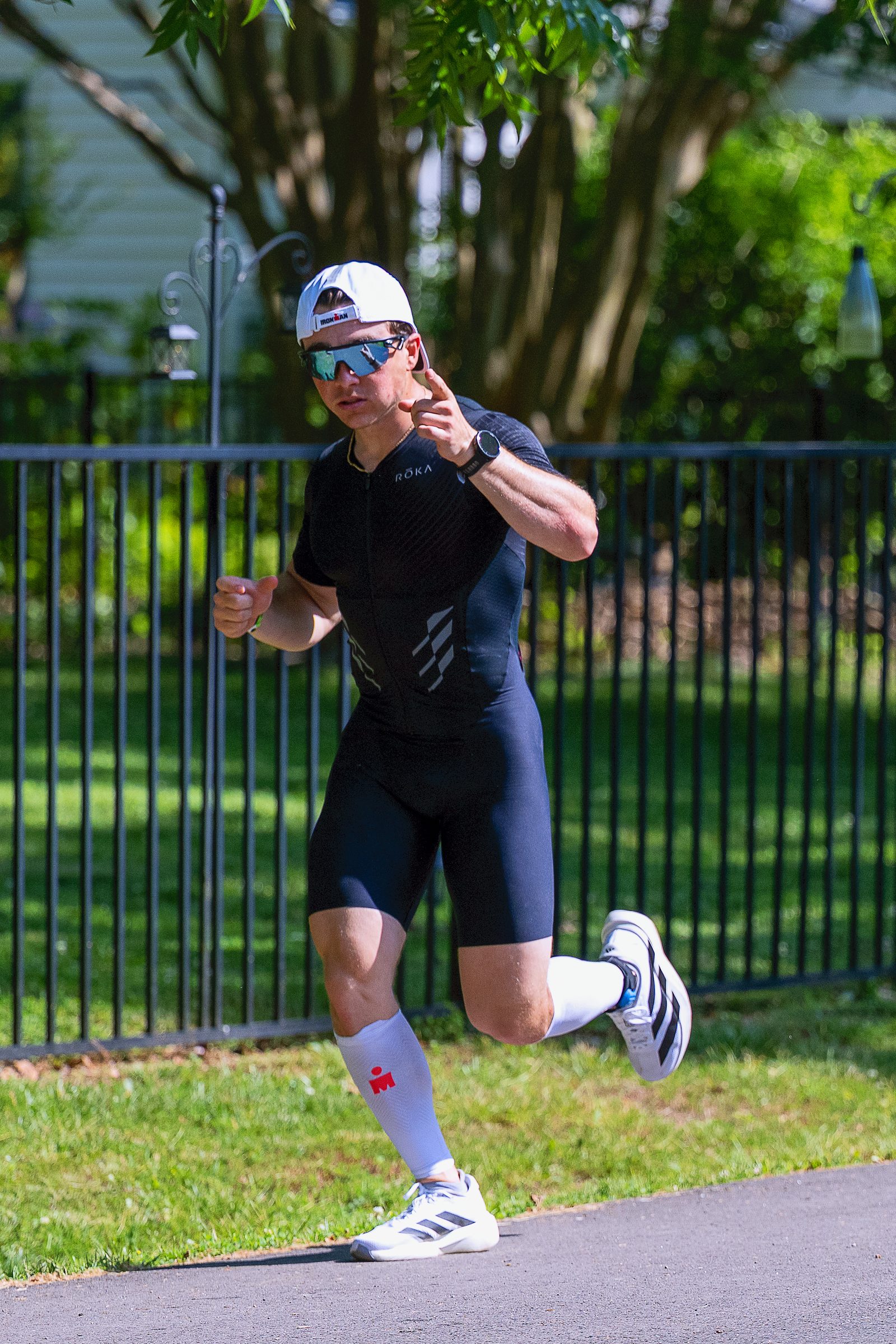
Dante in the same miles. You can read everything you need to know from a runner's posture — the shoulder set, the cadence, where the gaze is going. The run photos are the ones athletes come back to years later. The bike photo is impressive. The run photo is honest.
The Finish
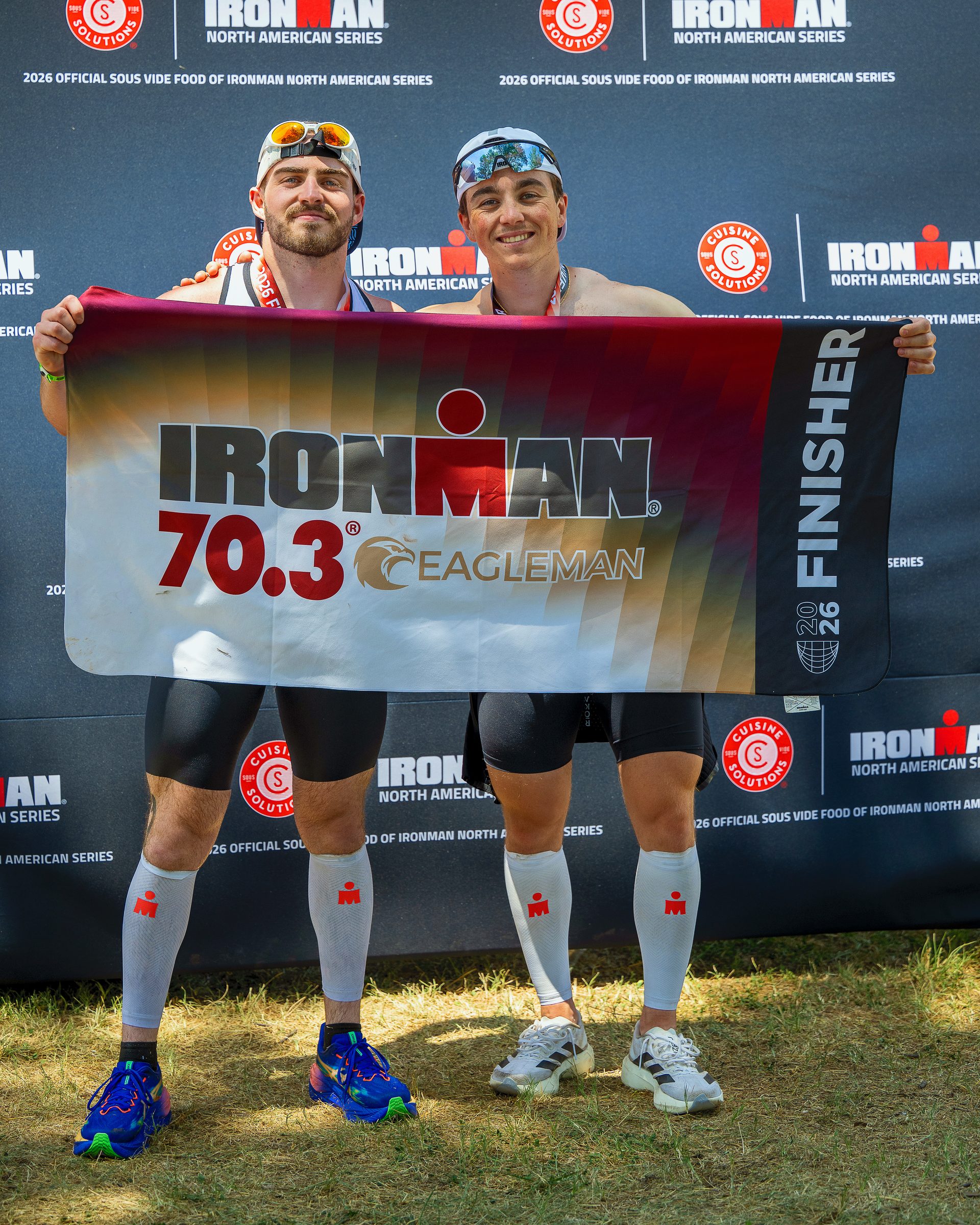
This is the frame I always want to be in position for — two friends who decided to chase this goal together, trained side by side through 2025, and made it to the other side of 70.3 miles in Cambridge.
Dylan crossing and finding Dante. The suffering stops. The math stops. What's left is just the fact of having done it — and someone who understands exactly what it took. I've photographed a lot of finish lines. The thing that never gets ordinary is watching someone cross who wasn't sure they could.
What You're Really Hiring a Photographer For
Most race finishers have an official finish-line photo. It's fine. You're wearing your medal, you're crossing the timing mat, there are thousands of people crossing that same mat that day and the photo looks like all of them.
What a dedicated race photographer gives you is the race itself — the queue on the riverbank before the gun, the step into the Choptank, the miles in between where nobody is watching, and the moment at the end that makes all of it mean something. Those images are harder to make, but they're the ones that actually tell your story.
"The best sports images aren't made at the finish line. They're made somewhere in the middle, when the athlete forgot anyone was watching."
If you're racing this summer — triathlon, road race, cycling event — and you want images that go beyond the finish-line chute, let's talk. I cover events throughout New Jersey, New York, and the Philadelphia area.
Tom Zarcone is a sports and portrait photographer based in Bridgewater, NJ, covering athletes and events across New Jersey, New York, and Philadelphia.